The images I showed are here. The words I used just below.
- Every company has a history. Use it! -- Here are a few words about what we call "history marketing"!
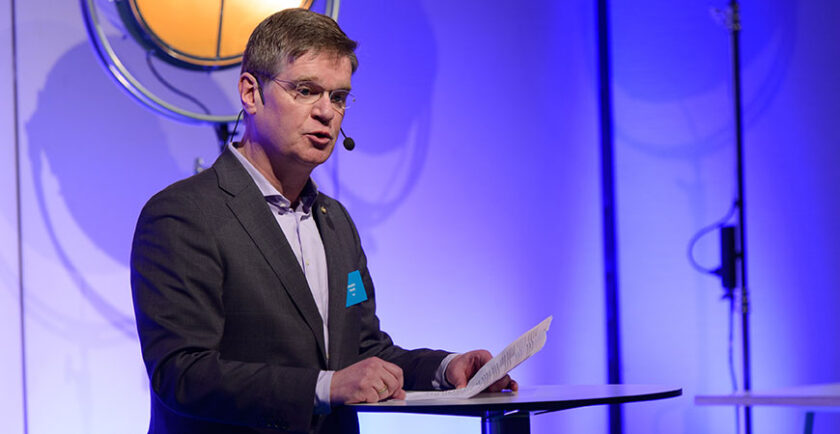
-- Alexander Husebye, CEO Center for Business History - All companies have a history- but many don’t use it… It may be brought out during anniversaries. They celebrate with a slogan like "the first hundred years." However, more and more companies – including the ones here – discover the business benefits of using the brand’s history, something marketers today call History Marketing.
- You don’t have to be 100 years old to work with your history. Pregnancy care provider Mama Mia! was founded in 1988 by Christina Wahlström. It took her years of struggle with the prevailing healthcare system before it took off. The stories of constantly seeking practical solutions to tricky situations guide decisions the company makes today. (Image from Mama Mia!'s historical archive at the Center for Business History.)
- At the other end of the timeline, we have Ericsson. It started in 1876 and here too, it is the founder’s vision that guides the brand’s path forward. In this letter from New York, Lars Magnus Ericsson criticizes the backward American telephone market. He advocated free trade – something the company still lives by today. (Image from Ericsson’s historical archive at the Center for Business History.)
- The letter is part of the love correspondence between Lars Magnus and Hilda Ericsson. They engaged in what I call "management by Love Letters." And their correspondence still inspires when formulating the company’s brand, where patents make up an increasing share of income. (Image from Ericsson’s historical archive at the Center for Business History.)
- The Ericsson brand has existed worldwide for three centuries – enduring world history is an essential part of the image the company wants to convey, emphasizing they never abandon a market, regardless of revolutions, wars, or natural disasters – talk about "sustainability."
- This man knows that well, Ericsson’s CEO Hans Vestberg. He understands the value of history and uses it frequently in his own History Marketing when meeting customers. He knows that Ericsson’s brand history makes a difference against competitors. He personally writes a diary every day, just like Hilda Ericsson did. (Image from Ericsson’s historical archive at the Center for Business History.)
- Sometimes the company still has its founder alive. Ingvar Kamprad is an essential part of the IKEA brand and he beamed with happiness when receiving the award as Entrepreneur of All Time before a thousand young people. But he advised the youth not to listen to old folks like himself. (Image: Svenska Dagbladet)
- Ingvar is almost ninety years old and IKEA has documented his life as part of the brand and company name Ingvar Kamprad Emtaryd Agunnaryd. The next step in using history is opening Northern Europe’s largest corporate museum in Älmhult – with newly made retro furniture and a hotel operation. (Image: IKEA)
- Europe’s largest corporate museum is found in Stuttgart, specifically in Untertürkheim. Here they have made the history of the Mercedes brand big business. The Mercedes Museum was built for three hundred million Euros and generates 40 million Euros annually. And it makes a profit, every year! (Image: Mercedes)
- The museum was inaugurated by the German president and of course Chancellor Merkel – was else! Being the oldest car producer played a major role internally for the corporate culture when exiting the merger with Chrysler, a forced marriage that almost dragged down the brand’s status. (Image: Mercedes)
- Germany and German companies are world champions at utilizing brand history, that is History Marketing. We in Sweden are lousy! A shame, when we have so many companies with a solid track record and brilliant entrepreneurs. Take just the sea captain Gustav Öberg, who single-handedly opened China as a market in the 1890s. (Image from Ericsson’s historical archive at the Center for Business History.)
- Already a hundred years before Newsweek named Stockholm an IT wonder, the city gained its first global fame – when Chinese delegations were sent out to modernize the old empire. These Chinese officials visited Ericsson in 1910 and sat in the company's stately boardroom on Tulegatan. (Image from Ericsson’s historical archive at the Center for Business History.)
- Brands are, of course, associated with the company’s products. I wonder if anyone here can guess what advertisement uses this 1910 slogan “One walks toward death wherever one goes”… It is Skandia’s advertisement for Life Insurance. By the way, Skandia’s brand had a near-death experience in the early 2000s --- (Image from Skandia’s historical archive at the Center for Business History.)
- The crisis came when a group of directors dipped their fingers deep into the jam jars. One of Sweden’s strongest brands was sold at bargain prices to new owners. Ten years later it became a Swedish-owned company again and Doctor Skandia was called in to handle the brand’s history. Employees were allowed to share in a healing process. (Image from Skandia’s historical archive at the Center for Business History.)
- Just as Mercedes used its history, Skandia used its history to glue the corporate culture together and renovate the brand after the forced marriage with Old Mutual. “Think further” became a slogan with historical meaning and the advertisement for life insurance in 2012 obviously differs from the Grim Reaper you saw earlier. (Image from Skandia’s historical archive at the Center for Business History.)
- Brand crises can, of course, arise for other reasons. In another insurance company – Trygg-Hansa – it was about a meddlesome attempt to renew both name and logo. You know, the lifebuoy – the very symbol of security. Historically, the logo floats on the water’s surface. Beneath lies a tangle of names and logos. (Image from Trygg Hansa’s historical archive at the Center for Business History.)
- The crisis came when they thought they would introduce a completely new name – “Alltid" ("Always”). To top it off with a broken security symbol in the logo. Perhaps they were lost in a difficult merger process? The response from employees and customers was clear. Everyone, from the Marshal of the Realm to Aunt Berta in Tomelilla gave a thumbs down! (Image from Trygg Hansa’s historical archive at the Center for Business History.)
- Finally, I take a company that, like Praktikertjänst, has the business idea expressed in its name. ICA sticks to the idea as it was expressed at its founding almost a hundred years ago; “independent retailers collaborating for purchasing and logistics.”Svenska Inköpscentralernas AB ("Purchasing Centers Inc.") – that is ICA. (The abbreviation SICA was already taken.) (Image from ICA’s historical archive at the Center for Business History.)
- Imagine if our friend in the advertising soap opera had been called SICA-Stig… Internally in the ICA culture, the retailer is center stage. The business idea is gospel and books about it are published continuously. By the way, did you know that ICA-Stig’s predecessors, ICAnder and his wife MonICA, are alive and thriving, they actually have their own Facebook page today. (Image from ICA’s historical archive at the Center for Business History.)
- “The most effective organizations are those which are aware of their past and the values which have got them to where they are today.” – Malcom Gladwell
- www.naringslivshistoria.se #historymarketing