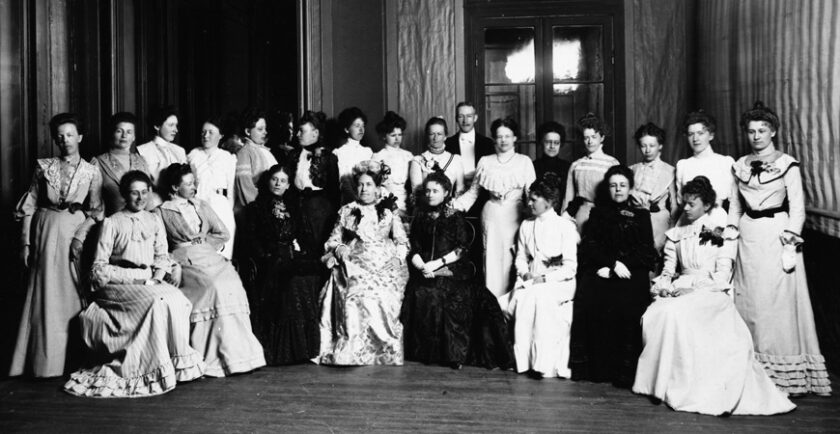
In Sweden, we have had freedom of enterprise for 150 years and women's suffrage for almost a hundred years. During this time, women have started and run businesses, sometimes with great success. Yet it has been difficult for archivists and historians to highlight female entrepreneurs. Their stories are noticeably absent from the archives. Partly because they did not see themselves as entrepreneurs but only worked to support themselves, acted as subcontractors, or hid behind vague titles such as "manageress." Often neither the entrepreneur herself nor her survivors thought her accomplishments were of great importance, so the archive was thrown out after the business owner's death. This makes it very difficult to conduct research about these women even for the most dedicated researchers.
Even one of the most successful entrepreneurs, and my personal favorite, Sofia Gumaelius, has fallen half into oblivion. She is the woman who with her own two hands founded the Swedish advertising industry in the early 1900s, but surprisingly few have heard of her. Her personal archive is gone, only fragments of her company's archive remain.
It is difficult to reconstruct destroyed archives of yesterday's great female business owners, but what we can do is consider what it looks like for today's entrepreneurs? How can we secure their rightful place in tomorrow's history books?
In revolt against the male-dominated historical writing, a few months ago 157 female musicians wrote "Don't forget us when history is written"http://www.aftonbladet.se/debatt/debattamnen/kulturochnoje/article18382577.ab. Among them are Robyn, Lykke Li, and Tityo. Three very successful female entrepreneurs in the music industry. It's good that they highlight the unfair historical narrative, but what have they done to facilitate those who will write their history in the future? Where, for example, is the archive of Konichiwa Records and how did Robyn plan to ensure it is preserved for posterity? Fame is fleeting, but the archive is forever.
Of course, it is the historians' and archivists' responsibility to highlight and tell the history of female entrepreneurs, but it is also up to the entrepreneurs themselves to ensure that source material is preserved to build on. Collect, save, deposit, donate to an archival institution, and let researchers in! 150 years after the introduction of freedom of enterprise, it is time for the female entrepreneur to take her history seriously. And it is not a day too soon!