1. Start
  2. /
  3. Nyheter och event
  4. /
  5. Nordic Industrial Heritage Culture in the 2020s – A new Nordic-Baltic research collaboration
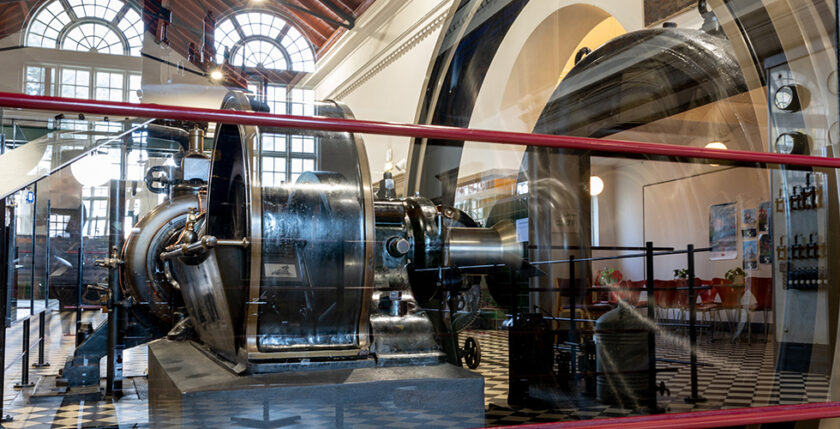
The Industrial Museum of Denmark is located in Horsens’ first electrical power plant, opened in 1906 (photo: the Industrial Museum of Denmark).

How has business globalization, digitization and relocation affected our understanding of industrial heritage culture? An interdisciplinary research group with participants from Denmark, Finland, Norway, Estonia, Lithuania, and Sweden has now formed to discuss the relevance of industrial heritage in the information society, during three workshops.

The collaboration is a pilot project, financed by the NOS-HS foundation. It aims to strengthen the network between Nordic-Baltic industrial heritage agents and to initiate an international research project on the changing meanings of industrial heritage.

An inaugural workshop took place at the Industrial Museum of Denmark in Horsens, Jutland, 5–7 November 2021. It was organized by Morten Pedersen, head of department at the Historical Museum of Northern Jutland, and Caspar Jørgensen, special consultant at the Palaces and Culture Agency.

The workshop focused mainly on similarities and differences between the different Nordic and Baltic countries during their transition from industrial to information society:

Maths Isacson, professor of Economic History at Uppsala University, started by drawing important dividing lines between the high-industrial period of the 20th century and the global industrial age in which we live today. Susanna Fellman, professor of Economic History at the University of Gothenburg, continued by discussing the effects of this transition concerning the location and mobility of industrial companies, in terms of reshoring and homeshoring.

Henrik Harnow, director of Odense City Museums, talked about future prospects of research on industrial heritage and industrial archeology in a northern European perspective. Johanna Björkman, head of cultural environment at Helsinki City Museum, and Casper Jørgensen each gave an overview about implemented conservation efforts and industrial heritage listing in Finland and Denmark, respectively.

Thereafter, Kristoffer Jensen, director of the Industrial Museum of Denmark, spoke about the role of museums in industrial heritage work. Finally, Anders Houltz, head of research at the Centre for Business History in Stockholm, discussed how awareness and engagement concerning industrial heritage and preservation can be strengthened among companies and the general public.

Day two started off with a tour of industrial landmarks in Horsens city, led by Caspar Jørgensen, after which the workshop continued with a discussion about concepts, methods and possible study objects.

However, the discussions are far from over. During 2022, the project will organize two more workshops, one in Tampere and one in Gothenburg, with the aim to formulate a joint research application.

Today’s industry differs in many ways from that of the 20th century, but it continues to set its mark on our society – how can we comprehend and narrate this historical transformation? The two upcoming workshops will seek to answer that question.

Our research centre

The research centre at the Centre for Business History in Stockholm manages independent research projects that highlight the development of Swedish business over time. The projects are financed by external trusts and research grants.

Read more

Updated

Related Articles

Want exciting stories, unique archival finds, and analyses that put today's business life in a historical perspective? Subscribe to our newsletter and stay updated on new articles, special issues, and special editions – directly in your email.

Margarita Feldman

BizStories.se becomes Foretagshistoria.se

The site changes name and appearance – welcome Foretagshistoria.se!
8 Apr. 2026
Margarita Feldman

Företagshistoria #1 2026: Readiness, flowers, and men’s fashion

Read about how Swedish companies have readied them in times of war, the Swedish Men's Fashion Council, and German-Swedish trade relations in the new issue of our quarterly magazine Företagshistoria, out March 11.
20 Mar. 2026

The history of business in your inbox

Stay updated on the history of business!

Subscribe to our newsletter and get information about our publications, invitations to events and seminars, and much more. Enter your email address below.

This website uses cookies

Cookies consist of small text files. They contain data that is stored on your device. To enable us to place certain types of cookies we need to obtain your consent. At , corp. ID no. , we use the following kinds of cookies. To read more about which cookies we use and storage times, click here to access our cookies policy.

Manage your cookie-settings

Necessary cookies

Check to consent to the use of Necessary cookies
Necessary cookies are cookies that must be placed for basic functions to work on the website. Basic functions are, for example, cookies which are needed so that you can use menus on the website and navigate on the site.

Functional cookies

Check to consent to the use of Functional cookies
Functional cookies need to be placed on the website in order for it to perform as you would expect. For example, so that it recognizes which language you prefer, whether or not you are logged in, to keep the website secure, remember login details or to be able to sort products on the website according to your preferences.

Cookies for statistics

Check to consent to the use of Cookies for statistics
For us to measure your interactions with the website, we place cookies in order to keep statistics. These cookies anonymize personal data.

Personalization cookies

Check to consent to the use of Personalization cookies
In order to provide a better experiance we place cookies for your preferances

Cookies for ad-tracking

Check to consent to the use of Cookies for ad-tracking
To enable us to offer better service and experience, we place cookies so that we can provide relevant advertising. Another aim of this processing is to enable us to promote products or services, provide customized offers or provide recommendations based on what you have purchased in the past.

Ad measurement user cookies

Check to consent to the use of Ad measurement user cookies
In order to show relevant ads we place cookies to tailor ads for you

Personalized ads cookies

Check to consent to the use of Personalized ads cookies
To show relevant and personal ads we place cookies to provide unique offers that are tailored to your user data