1. Start
  2. /
  3. News and events
  4. /
  5. Profit warning? Lively debate organized by CfN

What is profit – more than the difference between revenues and costs? Today, when profits in welfare are debated, this question is hot. Last Thursday, May 21, the Center for Business History organized a lively panel debate at Stockholm Chamber of Commerce that turned the concept of profit inside out.

"Where does the concept of profit belong," asked moderator Cecilia Stegö Chilò, "should it exist in research and culture or is profit only meant for the economy?" For entrepreneur and financier Olof Stenhammar, profit is a key to risk-taking, and thus to innovation. At the same time, he believes that few entrepreneurs are driven by expectations of huge profits – in general, creativity in entrepreneurship is more idea-driven than profit-driven. Profit may be a goal but it is primarily a means. Daniel Suhonen, author and representative of the labor union think tank Katalys, began by stating that capitalism works – as long as it understands that it is part of a society. Profit extraction in Swedish companies has, however, in four decades gone from a quarter to a third of turnover. This, Suhonen argued, has led to stagnant economy rather than increased investments, and is not something that benefits the capitalist system in the long run.

Linda Portnoff, researcher at Handels in Stockholm and CEO of the interest organization Musiksverige, prefers to speak of value creation rather than profit. Profit is, or should be, a means, not a goal, she also argued. She gave a striking example: in 2014 Apple recorded the largest quarterly profit ever in the corporate world, while many musicians struggle. "But when I look at my iPhone, I think: what is it worth without music?" The value of profit lies in the content it enables.

The market economy in a free society does not look the same at all times in history, reminded business historian Ronald Fagerfjäll. Therefore, profit has also been understood in different ways at different times. Profit is a mechanism of elimination, it feeds development. A company that does not grow is a zombie company – neither alive nor dead.

Profit is needed to run businesses, the panel agreed on. But does it primarily feed development or increased societal divides? For what goals should profit be the means?

The entire seminar, with presentations and the subsequent panel debate, can be seen here:
 

Updated

Related Articles

Do you want exciting stories, unique archive finds, and analyses that put today's business life into historical perspective? Subscribe to our newsletter and stay updated on new articles, themed issues, and special editions – directly in your email.

Margarita Feldman

BizStories.se becomes Foretagshistoria.se

The site changes name and appearance – welcome Foretagshistoria.se!
8 Apr. 2026
Margarita Feldman

Företagshistoria #1 2026: Readiness, flowers, and men’s fashion

Read about how Swedish companies have readied them in times of war, the Swedish Men's Fashion Council, and German-Swedish trade relations in the new issue of our quarterly magazine Företagshistoria, out March 11.
20 Mar. 2026
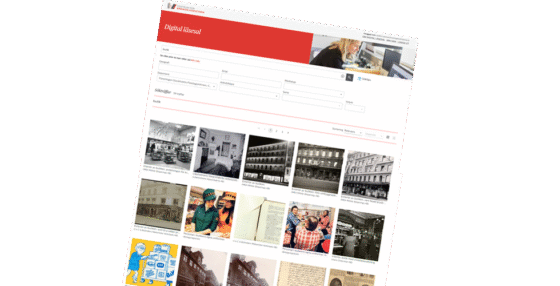
Den digitala läsesalen som Centrum för Näringslivshistoria nu lanserar finns på arkivet.naringslivshistoria.se.

The history of business in your inbox

Stay updated on the history of business!

Subscribe to our newsletter and receive information about our publications, invitations to events and seminars, and much more. Enter your email address below.

This website uses cookies

Cookies consist of small text files. They contain data that is stored on your device. To enable us to place certain types of cookies we need to obtain your consent. At , corp. ID no. , we use the following kinds of cookies. To read more about which cookies we use and storage times, click here to access our cookies policy.

Manage your cookie-settings

Necessary cookies

Check to consent to the use of Necessary cookies
Necessary cookies are cookies that must be placed for basic functions to work on the website. Basic functions are, for example, cookies which are needed so that you can use menus on the website and navigate on the site.

Functional cookies

Check to consent to the use of Functional cookies
Functional cookies need to be placed on the website in order for it to perform as you would expect. For example, so that it recognizes which language you prefer, whether or not you are logged in, to keep the website secure, remember login details or to be able to sort products on the website according to your preferences.

Cookies for statistics

Check to consent to the use of Cookies for statistics
For us to measure your interactions with the website, we place cookies in order to keep statistics. These cookies anonymize personal data.

Personalization cookies

Check to consent to the use of Personalization cookies
In order to provide a better experiance we place cookies for your preferances

Cookies for ad-tracking

Check to consent to the use of Cookies for ad-tracking
To enable us to offer better service and experience, we place cookies so that we can provide relevant advertising. Another aim of this processing is to enable us to promote products or services, provide customized offers or provide recommendations based on what you have purchased in the past.

Ad measurement user cookies

Check to consent to the use of Ad measurement user cookies
In order to show relevant ads we place cookies to tailor ads for you

Personalized ads cookies

Check to consent to the use of Personalized ads cookies
To show relevant and personal ads we place cookies to provide unique offers that are tailored to your user data