
This text is from:
History Marketing - The History of Companies as a Strategic Asset (Business History Publishing, 2023) by Anders Sjöman.
Where we establish what makes history a truly strategic asset for companies to use. We also examine the business benefits that companies gain from using history. (There are three, it turns out.)
By Anders Sjöman.
From History marketing - Using history as a corporate strategic asset (2023).

Gustav Mahler, who concluded the previous chapter by saying that tradition is about passing on the flame, seems to have instinctively understood that history is an asset to use. But beyond a 19th century composor's intuition, how do you determine whether an asset really has strategic value?
Economist Jay Barney knows how.
In his article "Firm resources and sustained competitive advantage" (1991), he described what distinguishes strategic assets from other, more run-of-the-mill assets. The article also became the starting point for the resource-based view of management.
Barney’s starting point was that companies must understand which of their internal resources can create lasting competitive advantages. All assets are useful, but some are more strategically important than others. Which ones depends on the business and the industry. In fact, even companies in the same industry can have different strategic assets depending on how they have chosen to organize themselves.
According to Barney, a strategic asset can be recognized by four characteristics. It is:
It bears repeating that all assets are not strategic. Money is a must-have for every company to have, but as asset, it is not strategic. Patents, on the other hand, are often strategic. Or specially adapted vehicles could be a strategic asset if you are a courier company. Or againk maybe not, if they can easily be replaced. The drivers’ knowledge of the best routes under different traffic conditions is probably harder to copy (characteristic 3) and replace (characteristic 4)—so maybe that is a strategic asset.
That is how every company must reason in order to determine which of their assets are strategic and which are not.
It is an assessment that may change over time and across management teams, even at the same company. For some businesses, strategic assets can be physical assets or intellectual property; for others, it is about more abstract resources such as employees’ knowledge and organizational culture.

Of course, the assets that a company ultimately decides are strategically important for its survival will need to be carefully monitored. These assets need a little extra care—and budget!—so the company can realize their full strategic potential.
The question this chapter sets out to answer is if a company’s history can be considered a strategic asset? Has a company’s past created strategic value for the future? Let’s test the asset “company history” against Barney’s four criteria.
I’ll start with the three that are easiest to demonstrate. I’ll then come back to the fourth—that history must be valuable.
History is unique. It goes without saying that no two companies have exactly the same history. In Sweden, the food retail giants KF and ICA have operated side by side in the same industry for over 100 years, but they have distinctly different histories. One emerged from cooperative movements, while the other was a counter-reaction from independent retailers.
Or take shoe companies Adidas and Puma, both of which trace their origins to the same shoe company, founded by brothers Adi and Rudolf Dassler. When the brothers fell out, they went their separate ways and created two competing brands—with completely unique histories thereafter.
There are many Swedish construction companies, but only Skanska helped save the Abu Simbel temple from the rising waters of the Nile. And among Swedish ice cream companies, only GB has ice cream maps that go back several decades.
A company’s history is therefore unique by definition and meets Barney’s second criterion.


History is inimitable. A company cannot copy another company’s history. Not even in an acquisition does the buyer replace its own history with that of the acquired company, although there are examples of attempts to do so. Instead, the new history is added to the existing one. Often, the acquired company’s story lives on as a distinct branch in the corporate group’s shared history. Therefore, as an asset, a company's history fulfills Barney's third criterion: it is imperfectly imitable.
History is not replaceable. Is there any other asset that can do the same job as a company’s history? (An asset that, to be precise according to Barney’s definition, also has to be unique and impossible to copy by any other company.) At the Centre for Business History, we have searched for years without finding one. We find it hard to see what else could similarly create a sense of continuity, build brands, strengthen organizations, and reduce risks. And if the history is documented in a professionally managed company archive, it becomes even harder to replace.
A sad but tangible example of just how irreplaceable history can be is the 2008 fire at Universal Studios. A fire caused by roofing work spread through archive storage areas at the film and music company’s studio lot in Los Angeles. Original film and music recordings were destroyed. Early reports did exaggerate the scale of the loss, but the underlying problem remained: there is only one original or master track for a film or piece of music. Universal Studios assembled a 70-person team to map the damage, identify the lost recordings, and investigate whether copies existed that could be used to recreate the master files. Operating in the industry that it does, Universal Studios has few historical assets with higher strategic
– or moneymaking – value.
History therefore meets three of Barney’s four criteria: it is unique, inimitable, and impossible to replace.
Now the fourth criterion remains. According to Barney, a strategic asset must be valuable in that it can create competitive advantages and help neutralize threats in a company’s environment.
I have five arguments for why company history has precisely these qualities:
Do you remember the last company logo you saw?
Close your eyes and picture it. Or take a look at one of the logos here.
What did the logos make you think of? What associations did they evoke?
When I’ve done this exercise with clients, the associations usually come pouring out. The IKEA logo, for example, might make people think of “my first home of my own,” “meatballs,” or “our first project together as newlyweds.” Others might associate it with “payday inferno,” “assembly chaos,” and simply “divorce.”
Whether the associations are positive or negative, they have built up over time. We have favorite brands and brands we avoid. It goes for us both as private individuals and in our professional roles, where we may prefer certain suppliers to others. Associations exist around both consumer brands (B2C) and business brands (B2B). Brands are imbued with a wealth of perceptions, built up over time and shaped by the company’s own history.
This line of thinking has been around for a long time among marketers. In 1955, Burleigh Gardner and Sidney Levy published “The Product and the Brand” in Harvard Business Review. They wrote that a brand is much more than a label or logo: it is a complex symbol that consumers gradually fill with their own associations.
Granted, a brand that has just been born may have little meaning - but that doesn't stay true for long. It quickly acquires significance for customers and other stakeholders. The brand’s character continues to develop through interaction with customers and networks. It is not a straightforward process: the company communicates, customers respond, and new associations emerge. The brand is built from the stories associated with it. The longer the company’s history, the more stories there are to draw on. (Anders Bengtsson and Jacob Östberg develop this line of reasoning in their book "Märken och människor" (Brands and People), 2006; available now in a third, expanded edition, 2018.)
If the company has been reasonably consistent through periods of both change and continuity, its history can convey a coherent identity. It becomes an effective way to show what the company stands for and why it exists—its why, to use the popular expression coined by marketing consultant Simon Sinek a few years ago.
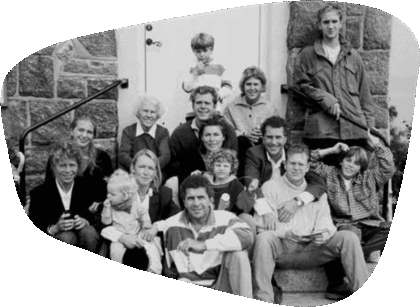
The company’s history shows why it was founded, what benefit it provides, and what unites the people who work there. It reminds partners of why they do business with the company, and customers of what they can expect, and employees of why they work there in the first place. Working long days for a company becomes easier when you know there is a greater purpose behind the business as a whole—which its history can provide.
This is especially evident in family businesses, where the family’s history is often closely intertwined with the business’s. When new generations take over, history can convey the values of those that came before. It can also also, somewhat counterintuitively, help distinguish the past from the present and give new leaders room to develop the business.
It is easy to think that only older companies can benefit from their history. But history is just as important for young companies. Even if the brand has not yet built up as many associations, it was for sure born in a historical context.
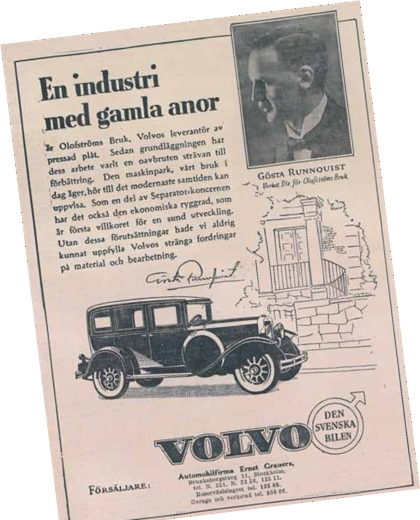
For example, when Volvo was a newly established car manufacturer in the early 1930s, the company was keen to highlight the established suppliers that provided components for production. The young brand used other people’s history to signal experience and stability.
So younger companies need not envy their older peers. They can start telling their history from the outset. After all, every company operates in a historical context—here and now, and continuing into the future.
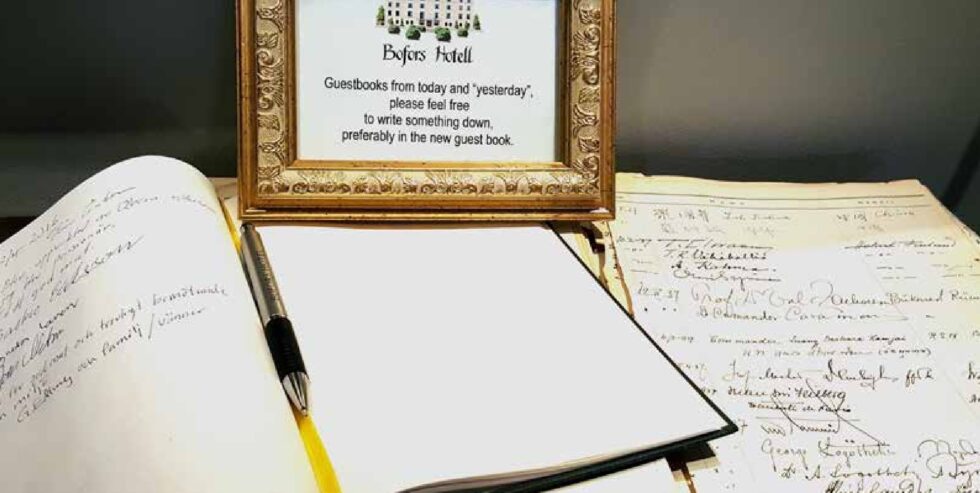
A few years ago, I stayed at the classic Bofors Hotel in Karlskoga, built in 1930. At check-in, I was asked to write my name in a physical guestbook. Beside it was another guestbook, open to the same date—but from 1942. I could see the names of people who had done exactly what I was doing right now, only 75 years earlier. I’ve rarely experienced anything more authentic or spine-tingling at a hotel.
As already mentioned, consumers want to know who they are buying from, perhaps more than ever today. The demand for transparency applies not only to what a company does today, but also to what it has done in the past. Some professionals, from purchasing managers to stock analysts, may even be expected to investigate a company’s past dealings.
In a global study of 10,000 consumers, the advertising agency Havas found that customers want to be able to “see inside brands.” This was true for both business-to-consumers (B2C)
and business-to-business (B2B) operations. In marketing, the term glass box brands emerged, referring to businesses that are transparent to the outside world and have nothing to hide.
Havas’s study can be put next to the one from Stackla (see Chapter 1) on consumers’ desire for brands to act authentically. Taken together, they show how expectations on companies have
increased for both transparency and authenticity.
There is yet another trend in the corporate world that is pushing authenticity. Since the arrival of the World Wide Web in the late 1990s, organizations have kept increasing their own communication efforts. While companies have always produced publications and held presentations, there is now a much higher level of self-publishing, especially on digital
platforms. Content marketing it its own field now, a development fueled by consumers’ growing fatigue with advertising.
In such a situation, building storytelling around one’s own – verified! – company history should be obvious to do. Nothing is more authentic than what actually happened. Companies that know their history and maintain an organized corporate archive have a source of real stories that can ground the brand in reality in a way that invented brand stories never can.
Historical stories also provide evidence that the company can live up to its promises. New products, services, designs, and offerings gain context when connected to past experience. When properly balanced with what is new, history serves as a quality guarantee and proof that the company has remained relevant over time--and will continue to do so.
A strong historical foundation can also help a brand weather a storm. Just ask Mercedes-Benz. When Swedish tech magazine Teknikens Värld conducted its evasive maneuver test (known as "the moose test") in 1997, the new Mercedes A-Class flipped over. A car marketed as safe and reliable was suddenly lying on its side, and the company found itself caught in a media storm. A younger car brand might have found the crisis harder to weather. Mercedes-Benz, however, had a hundred-year history of well-built, safe cars to draw on. That history was well documented and had long been featured in the company’s communications. The brand wavered, but was able to recover—much like the A-Class, which was lifted up and put back on its wheels. Against the backdrop of its history, the company could treat the incident as the one-off it was.
When a company draws on authentic, fact-based stories, no one can doubt what it is and what it stands for. Actively using its history builds lasting relationships with customers, employees, partners—indeed, with all the stakeholders involved in the business. What more could a business ask of a strategic asset?
Perhaps a little… wisdom.
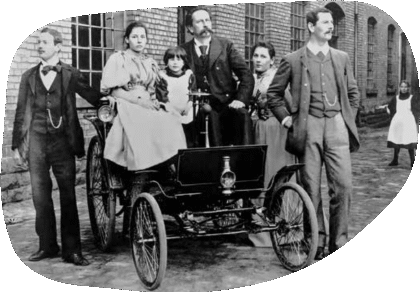
It seems self-evident that knowing where we come from makes us wiser. Yet that insight does not automatically lead companies to invest in their history. This work has to be weighed against other needs, costs, and priorities. Only when the use of history becomes a high strategic priority does it become natural to allocate a budget to it as well.
Sometimes it takes a crisis for a company to prioritize their own history and look for the wisdom it might hold.
For the Danish toy company LEGO, the years 2004–2006 were such a period. The company made losses it had not experienced since launching its plastic building bricks in 1949, and barely even since its founding in 1932. A third of the workforce was laid off, and several product categories and smaller brands were discontinued.
A new CEO was tasked with turning things around. He began looking at—the company’s history. He wanted to clarify why LEGO existed in the first place. Was it there to just make colorful plastic bricks, or was there a greater purpose? He didn’t know the answer, only that whatever response the organization ultimately would arrive at would determine its future choices. For over a year, employees, former employees, partners, and above all customers—both children and adult collectors—were interviewed. The company also delved deeply into the corporate archive that had long been housed at the head office in Billund.
In the process, they revived the founder’s motto—“Only the best is good enough”—but above all, they concluded that LEGO did not exist to make LEGO bricks. Rather, the bricks were a means to a greater end. Founder Ole Kirk Christiansen, who had started out as a carpenter and maker of wooden toys, wanted to create products that fostered children’s systematic creativity and development, preferably through repetition. LEGO bricks were perfect for this, but they were not the goal in themselves.
The name LEGO itself was, in fact, a constant reminder of that mission: an abbreviation of the Danish words “leg godt,” meaning “play well.”
The decisions that followed—both cutbacks and new investments—were based on this historical foundation. Partnerships and initiatives that did not align with the company’s origins were discontinued, while others that better reflected the founder’s ideas were given room to grow. During several turbulent years, history became a platform that gave the organization order, clarity, and direction.
Majken Schultz and Tor Hernes of Copenhagen Business School studied LEGO’s use of history during the crisis years in a their 2013 study, A Temporal Perspective on Organizational Identity. It shows how the company based its transformation on active questioning and investigation of all that had gone before, not on the uncritical retelling of old stories. By actually studying its heritage, LEGO grew wiser through its history.
To ensure that its history does not fade into oblivion again, but remains a topic of discussion, LEGO has continued to make use of its history. This has included buying back the founder’s house and turning it into a company museum and training center for new employees.
The English mortgage lender Nationwide Building Society takes a similar approach.
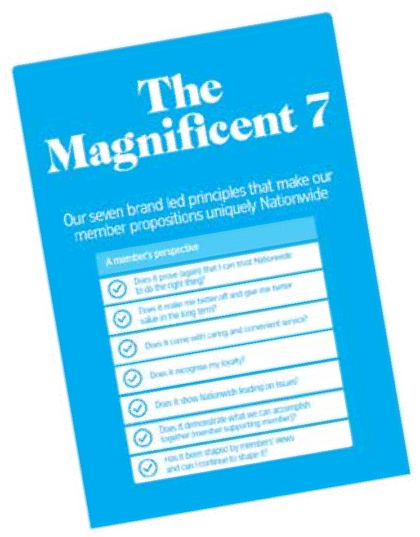
For over 175 years, the company has helped Britons finance their homes and manage their banking. Its leadership now draws on seven principles that have evolved over the company’s history, known internally as “The Magnificent Seven.” If a decision does not align with the principles, it is not implemented.
Head of Archives Sara Kinsey described it as essentially asking what the founder would have done: “What would Mr. Cooper do?”
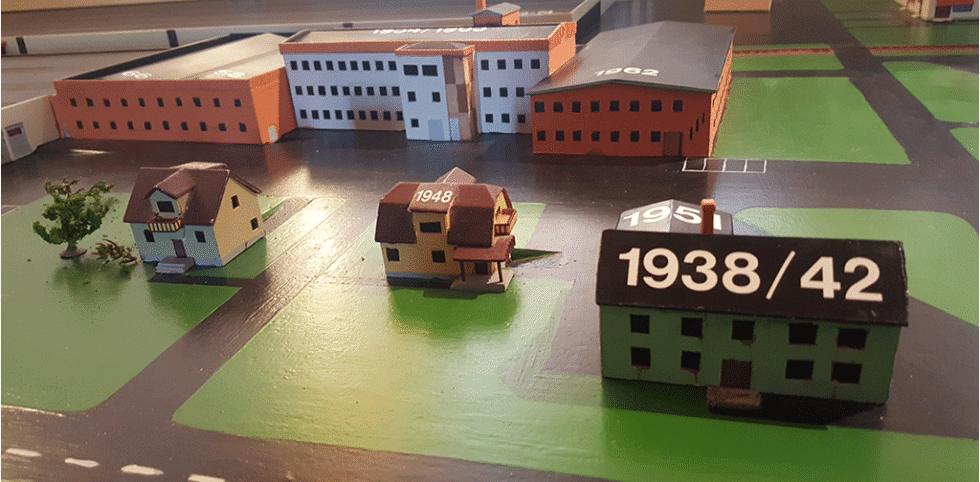
In Sweden’s Falbygden region, the family-owned company Kinnarps has chosen a more tangible approach. The company has preserved the first home of founders Jarl and Evy Andersson, where their living quarters and workshop shared the same space. The first lathes, saws, and furniture models are still there. Next door is today’s modern production facility, with robotic, process-controlled halls. Employees regularly visit the founders’ home for training, to learn about the company’s founding in 1942, and to see an exhibition of important pieces of furniture from each decade.
When companies such as LEGO, Nationwide, and Kinnarps use their history in this way—as a narrative, to use a popular communications term—they connect the past, present, and future. Today’s leaders build narratives from real historical facts, much as museum curators create new exhibitions from older materials. The past becomes a source of knowledge that can be used to understand today’s issues.
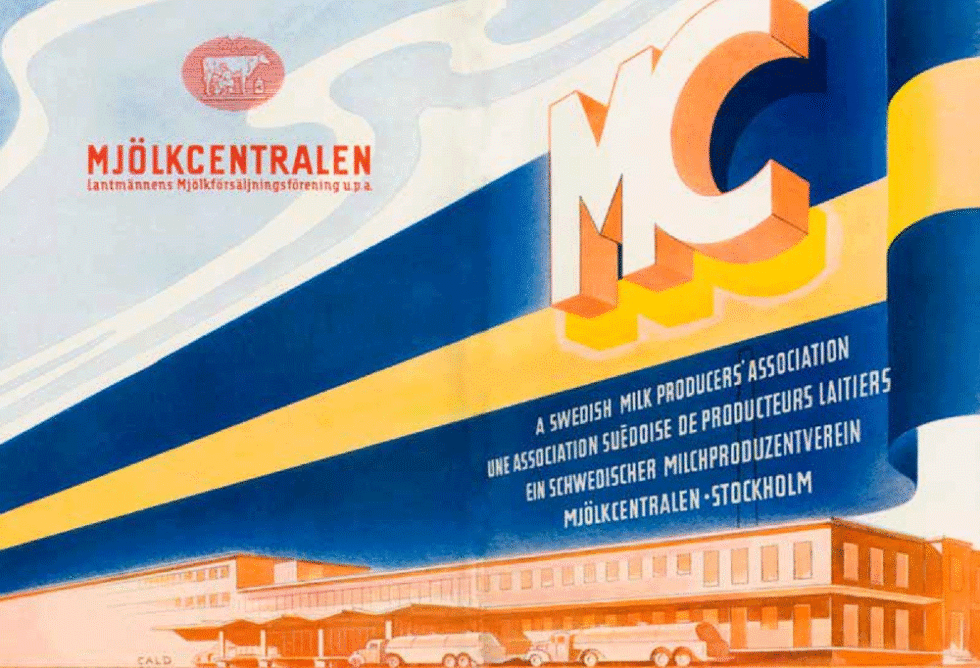
Knowing their history in depth also helps companies correct inaccuracies or myths. For example, dairy giant Arla did not take its name from a farm in northern Uppland, as many seem to believe. The archive shows that the name was an internal proposalwhen Mjölkcentralen AB wanted to change its name.
Similarly, the American consumer goods giant Procter & Gamble has to regularly correct myths.
One persistent myth claims that Ivory soap, which floats in water, came about by accident when a worker left a mixer running during his lunch break.
It would have been a charming story, much like how British bacteriologist Alexander Fleming noticed in 1928 that mold had killed bacteria in a forgotten culture dish, and went on to extract the antibacterial substance we know today as penicillin.
But Ivory was not created by accident. It was methodically developed in a laboratory. The son of the founder had set out to create exactly what he ended up with: a soap that didn’t sink in water.
I would argue that this is an equally compelling story that demonstrates proactive product development. It is also true, unlike the story about the careless worker, and so much better to use then.

Based on everything above, I think it’s safe to say that knowing their history makes companies wiser. As if the complete opposite, not remembering anything from one’s past, wasn’t discouraging enough. “Those who cannot remember the past are condemned to repeat it,” as Spanish philosopher George Santayana said in 1905.
A strategic asset should ideally have a measurable economic value. In a corporate setting, this would make it easier to justify a larger budget. For physical assets such as real estate, product inventory, and contracts, valuation is often relatively straightforward. But how do you put a price on a logo, a patent—or a company’s history?
There is no simple answer. Intangible assets can be valued using different models, which rarely provide a definitive figure. They can, however, together give an indication of value. Here are a few ways to think about the economic significance of a company’s history.
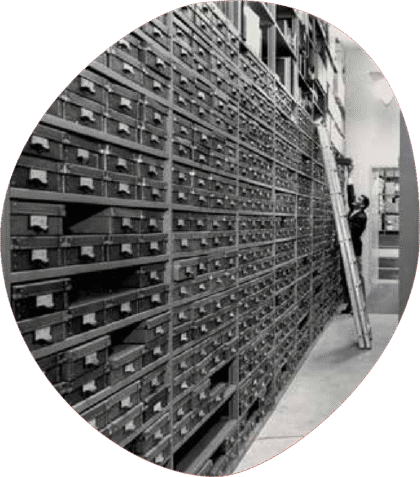
One approach is to view the company archive as a collection. Individual objects and documents can be assigned estimated market values, for example when they are being insured.
The archives of appliance giant Electrolux include, among other things, refrigerator designs from the 1940s by French-American industrial designer Raymond Loewy. His designs today sell at auctions for thousands of dollars, which gives an indication of the value of the designs the company still owns.
In the same way, company correspondence, which is occasionally sold by antiquarian bookshops, can be assigned a clear price. In spring 2019, for example, a collection of documents from a pivotal turning point in the history of the company Husqvarna was offered for 14,000 SEK at an antiques fair in Stockholm.

In sports and fashion, the value of historical items is particularly clear. An ordinary baseball bat might cost $50–70, but a bat signed by the entire Boston Red Sox team after its first World Series win in nearly a century, in 2004, later sold for nearly $3,000. The estate of fashion icon Yves Saint Laurent also brought in large sums when his clothes and belongings were sold.
Even items from bankrupt companies can become hot items in a secondary market. A baseball cap given away for free to employees of the bank Lehman Brothers currently costs around $75 online. When Silicon Valley Bank collapsed in spring 2023, mugs, blankets, and cheese boards (!) bearing the company’s logo appeared for sale on eBay just a few days later. Items that had once been free suddenly became collectibles.
Of course, valuing the archive as a collection of objects only gives a limited picture. If this was the only way to assign value, only items that can be sold on a secondhand market would be considered value. The “online auction”-value is ultimately only a small part of the economic significance of corporate history. The goal is to understand the value of the company’s entire cultural heritage, including the knowledge and work that employees have built up over the years.
A more comprehensive approach then is to try to estimate the company’s goodwill value.
In accounting, goodwill is generally described as the value of a company’s reputation and standing, and is measured as the portion of its value that exceeds its net book value. A company with a good reputation may be valued above its book equity, while a company with a poor reputation may suffer from badwill and be valued lower.
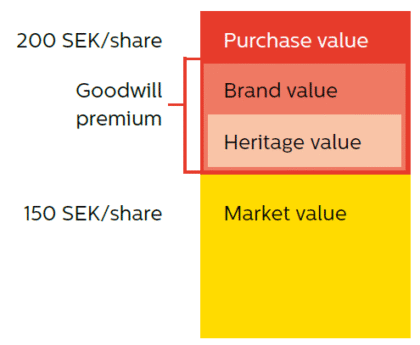
A company’s goodwill value is most evident when it is acquired by another company. Goodwill is then the difference between what the buyer paid and the company’s net worth. Suppose a publicly traded company’s shares are trading at 150 kronor, even though its book value is 140 kronor. A buyer then offers 200 kronor per share to acquire the entire company. The buyer therefore sees value beyond both the book value and the market’s previous valuation. This premium also includes the value of the company’s history.
The graphic illustrates this example of how a buyer pays a premium for the company’s brand value.
Now, since a company's brand is largely built on its history, we can assume that part of the premium represents its history or heritage value. This makes it possible to estimate the monetary value of the company’s history. (The basis for this goodwill reasoning comes from industry colleague Tim Schantz at the American heritage consultancy The History Factory.)
But are acquiring companies really willing to pay extra for a reputation built over a long time?
Yes, they are.
In a 2012 survey by Weber Shandwick, 575 senior executives in the United States, the United Kingdom, China, and Brazil were asked what share of company value could be attributed to reputation. The average answer was 60 percent. As many as 86 percent also said they had actively worked to improve their company’s reputation over the past five years.
History can also generate new direct revenue. Retro products are a clear example: shirts with old logos, vintage collections, reissued furniture designs, vintage household goods, and recreated enamel signs.
Companies can also revive brands that were previously discontinued. For example, dairy group Arla temporarily relaunched an older yogurt in 2015 to mark its centenary. Or you can buy the rights to products with an interesting history - like drinks company Spendrups did this when the it acquired the soft drink Cuba Cola.
Cuba Cola was actually the very first cola on the Swedish soft drink market when it first came out in 1953. It was launched when a ban on selling drinks containing phosphoric acid and caffeine was lifted in Sweden. Despite the headstart, the American soft drink giants Coca-Cola (which arrived in Sweden only three months later) and Pepsi Cola quickly drove Cuba Cola almost entirely off the market.
But no one could take away the fact that Cuba Cola was first—and that became the starting point for Spendrups’ marketing campaign in 2022, when they brought back the drink. The ads featured phrases such as “The market leader is back. (Refers to the period from February to April 1953).”
And on the company’s website, it said: “People rarely talk about Eugene A. Cernan, who walked around on the moon in December 1972, three years after Neil Armstrong… First is always first. We are Neil.” The tongue-in-cheek campaign got the word out that Cuba Cola was back - and it has since cut out its share of the Swedish soft drinks market.

Companies can also generate revenue through museums and visitor centers. These ventures often become separate business units within the company, units that are expected to cover their own costs and ideally make a profit.
In Sweden, there are IKEA Museum in Älmhult, Volvo Museum in Gothenburg, the Husqvarna Museum in Huskvarna, and Absolut Home in Åhus. The Dalén Museum in Stenstorp tells the story of inventor Gustaf Dalén and AGA’s history.
Abroad, examples include The World of Coca-Cola in Atlanta, Mercedes-Benz Museum in Stuttgart, BMW Museum in Munich, and the Vitra Design Museum in Basel. Fazer’s visitor center in Helsinki attracts tourists and generates revenue. Guinness Storehouse in Dublin combines a corporate museum and visitor center and makes a profit. The Ben & Jerry’s ice cream factory in Vermont is the state’s most popular tourist attraction, and in Osaka there is the Cup Noodles Museum, which tells the history of instant noodles.


Absolut Vodka is made in Åhus, Skåne, and in a villa in the heart of town is Absolut Home, where visitors are guided through the house and its history, ending with a workshop where they get to make their own cocktail.
Entire regions can also build tourism around company history. In northern Italy, the area between Modena, Maranello, and Bologna has developed the concept of Motor Valley, or Terra dei Motori. It is home to museums and factories for Ferrari, Maserati, Lamborghini, and Pagani. It is also home to the autostrada between Milan and Varese, the world’s first true motorway, built in 1924. Motorcycle enthusiasts can also indulge their passion at Ducati’s company museum. Tour operators now offer guided Moter Valley-tours for visitors from around the world, including company visits, hotels, and racetracks. For a country accustomed to organizing group trips to cultural and historical attractions, looking for another travel concepts must have been a natural next step—and they found one built around the region’s business history.
So although “our company’s history” is not always an asset that can be assigned an exact numerical value, it is clear that history creates financially measurable value in many ways. Once again, history has value.
There is a saying in the story of Sweden’s welfare state that “Per Albin created it, Ingvar furnished it, and Erling clothed it.”
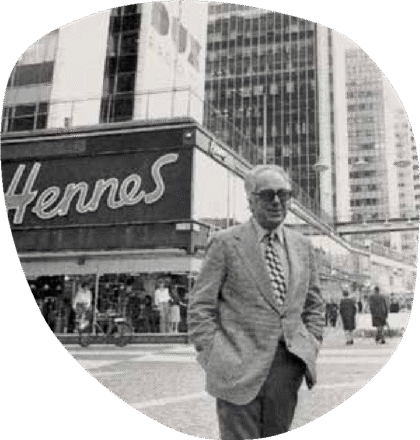
As Sweden’s long-serving prime minister, Per Albin Hansson symbolizes the role of the state and the public sector in shaping Swedish society. The other two, however, are private business owners: Ingvar Kamprad built the IKEA furniture chain, and Erling Persson created the clothing giant H&M.
The saying can easily be expanded. Continuing with Sweden: Lars Magnus Ericsson (telecom group Ericsson) connected Sweden with his telephone exchanges and phones and Axel Wenner-Gren (Electrolux) provided refrigerated food and simplified cleaning.
In modern times, Daniel Ek and Martin Lorentzon (Spotify) have filled Sweden with music and Niklas Zennström (Skype) connected today’s calls.
All these companies and entrepreneurs have continuously provided us with products and services that we have benefited from, making them part of not only business history but of society’s history as well.
There are obvious objections to such simplified descriptions. No single company can be responsible for an entire social transformation. But the point is that every company can highlight its own contribution to building society as a whole. Those that actively take their place in the broader cultural heritage can strengthen their brand, their resilience to malicious rumors, and their relationships with various stakeholders.
As corporate legacies are recognized as part of social history, company archives become important sources for academic research. They contain information about economic and social conditions that interest researchers in many disciplines.
That is why, at the Centre for Business History, we believe companies should encourage outside researchers to use their archives. This not only increases knowledge of social development but can also give the companies themselves new perspectives on their own history. Our former CEO Alexander Husebye writes more about this here.

Sometimes, company archives and industrial sites also receive official recognition. For example, Martini & Rossi’s archive has been designated Great Historical Interest by the Italian state. The 1886 patent for a motorized vehicle by Carl Benz, held in the Mercedes-Benz archive, is included in UNESCO’s Memory of the World Register. The register also includes the family archive of Alfred Nobel (the founder of the Nobel Prize) and the City of Stockholm’s collection of architectural drawings from 1713 to 1978.
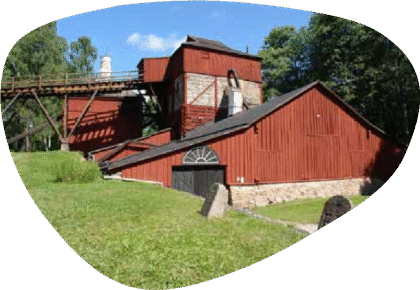
Several industrial sites in Sweden have received international recognition. Engelsberg Ironworks is on the UNESCO World Heritage List, as are Falun Mine, Great Copper Mountain and the surrounding landscape, which tell the story of Sweden’s early development as an industrial nation. Nearby Engelsberg is Oljeön, home to the world’s oldest preserved oil refinery.
A more indirect way to claim a place in societal history, but perhaps more powerful than an official award, is when a company’s history appears in popular culture. Stories about companies and entrepreneurs are appearing increasingly often in film and television. The Founder (2016) depicts Ray Kroc’s journey with McDonald’s, the TV series Halt & Catch Fire (2014–2017) is based on the founding of computer company Compaq and the arrival of the Internet in the 1990s, and the film Air (2023) tells the story of Nike’s 1980s move to sign basketball star Michael Jordan.
The list of tv-series based on business history can be made even longer. The Netflix series The Playlist (2022) depicts how Daniel Ek and Martin Lorentzon created Spotify and transformed the music industry through music streaming. In Italy, the distillery of the family-owned grappa company Poli Distillerie, founded in 1898, was used as a filming location for the television series Di Padre in Figlia (From Father to Daughter). The fictional story about a grappa-producing family was watched by between six and seven million viewers per episode when it aired in 2017.
The film Eld & lågor ("Fire and Flames", 2019) tells of the rivalry and love affair between two amusement park families who laid the foundations for the Gröna Lund amusement park in Stockholm, while the television series Mr. Selfridge (2013–2016) is about the storied London department store.
Company history also appears on stage. In 2022, Västmanlands Teater in Västerås staged “Asea – Här kommer framtiden!”, a newly written play about the company Asea, the city of Västerås, and all the people who lived and worked there over a period of 100 years. Helsingborg City Theatre presented “Tysta Maria” in spring 2023, a newly composed musical that wove together the stories of two historical women from the beginning of the 20th century, one of whom was coffee entrepreneur Maria Zoéga (whose history we already discussed in Chapter 1).

Of couse, dramatized stories often take great factual liberties. But the fact that a company becomes the subject of a film, tv-show, or stage play is still a sign that it has earned a place in the broader narrative of society.
And that’s not even counting all the documentaries about companies, such as the German Die Sportsfeinde aus Herzogenaurach about the Dassler brothers and their Adidas and Puma, or Die Aldi-Brüder about Karl and Theo Albrecht and the grocery chain Aldi. The list could go on forever. But I’ll stop here.

I HAVE NOW given five arguments for why a company’s history is a valuable asset: (1) it gives the company meaning and context, (2) it is the most authentic thing the company has, (3) it makes the organization wiser, (4) it creates financially measurable value, and (5) it gives the company a place in society’s narrative.
Add to this that history is unique, inimitable, and irreplaceable, and it meets all the criteria Jay Barney sets for a strategic asset.
So yes, a company’s history is a strategic asset.
Now that we have established that a company’s history is a strategic asset, the next step is actually start using it. This applies to all types of businesses, regardless of age or stage of development. History should always be a candidate for activation when company management is considering its next tactical moves.
But understanding that you have a strategic asset does not automatically mean you use it.
Because the most common challenge for heritage managers and corporate archivists remains explaining what a company actually gets out of using its history - commercially speaking. The situation is complicated by the fact that different parts of the company see different benefits. The marketing director wants to strengthen the brand, the HR director heighten the corporate culture, the general counsel wants historical material as support in trademark disputes, while the product and sales departments are looking for inspiration for new products and ways of working, and the CFO wants to understand the background to past decisions and forecasts.
How much easier it would be if there were a clear “Chief History Officer” at the company who saw the big picture and was responsible for a (growing) annual budget.
At the same time, this is precisely where an opportunity lies. If several parts of the company see different benefits in its history, there is a broader basis for investment than if it interested only a single decision-maker. History marketing is therefore about more than marketing. It is an approach that can benefit the entire business.
Swedish furniture giant IKEA has understood this.
The company has its own archivists, collection managers, and historians who work from a clear understanding of the value of history. For a long time, a simple sheet of A4 paper hung at the entrance to its corporate archive in Älmhult, Småland, where IKEA originated and has its global headquarters. It said:
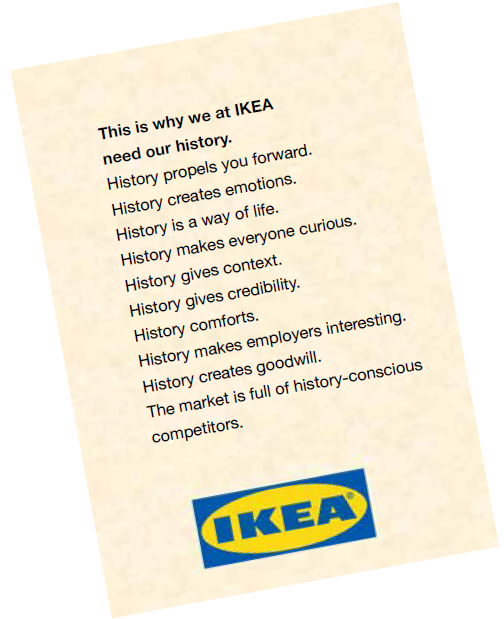
Every company should have a list like that. Each purpose listed is reason enough to increase the history budget. But based on our experience, we tend to group the various benefits of history into three areas. Companies that actively use their history do so because it:
Companies that not only see history as a strategic asset but also actively use it do so for one or more of these three reasons. Let’s go through them one at a time.
First, an obvious point: people have greater trust in companies they know than in ones they’ve never heard of. Even so, it’s a point worth repeating.
In 1958, business magazine publisher McGraw-Hill published an advertisement that became a classic in the advertising world. It depicts a grumpy middle manager in a suit and bow tie, leaning forward in his office chair. Beside him, his thoughts are listed:
I don’t know who you are.
I don’t know what your company does.
I don’t know what your products do.
I don’t know what your company stands for.
I don’t know who your other customers are.
I don’t know whether your company is doing well or badly.
I don’t know what your reputation is.
What was it you wanted to sell me again?
In advertising circles, the ad is known as “The Man in the Chair,” and in 1999 it was named the best business-to-business ad of the century by the trade publication Advertising Age.
The message is that sales begin long before the salesperson calls the customer. McGraw-Hill argued that they began with advertising in the business press. I would say they begin even earlier: with the reputation the company has built since its first day.

As I have described previously, brands are created through an interplay between companies, customers, and other stakeholders. Together, they build narratives associated with the brand. The longer a company’s history, the more narratives there are to choose from. Through actively using its history, a company can highlight certain narratives more than others. Examples from its own fact-based history strengthen the credibility of the promises the company makes today.
A company’s history builds trust among all its stakeholders, including customers, business partners, other companies, government agencies, and society at large.
Every year, Medieakademin measures Swedes’ trust in the media, institutions, and companies in its Trust Barometer. In the 2021 survey, Systembolaget, IKEA, and ICA ranked highest among companies. All three preserve their history in professionally managed archives and also actively keep telling and retelling their history. Coincidence? Think not.
SOMETIMES I MEET PEOPLE who think that a good history must show how organizations have done exactly the same thing all along. I have never seen such a history. The reason is simple: no such organizations exist. All businesses change. Effective use of history is therefore about choosing the stories that best represent the company during different periods.
Some companies have actually worked toward the same fundamental goals since they were founded—and can document this with archival material. Clas Ohlson, from the book’s introduction, is one example. The founder really did write that he wanted to help people throughout the country solve their everyday problems. Back in 1918, mail order was the best solution. Today, Clas Ohlson works with e-commerce and services for the home. Technology has changed, but the core idea lives on.
Here, the use of history can show how the company has remained true to its founding idea while adapting to society’s development. The message is: We are working toward the same goal as always, but using the opportunities each era offers.
SF Studios is another example. The company has been making films since 1919, when it was known as Svensk Filmindustri. Production methods have changed. Today, external production companies are hired, unlike the days when full-time film workers made movies at the company's own stuido lot Filmstaden in the outskirts of the Stockholm. But the goal is still the same: to create great films.
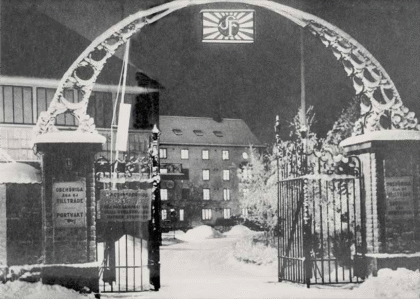
Similarly, food retailer ICA has worked to get food to people while ensuring that its affiliated retailers have the freedom to operate as independent business owners for over 100 years.But the core idea of “independent retailers in collaboration” (not to be confused with franchising or with centrally owned stores) has also undergone many changes since Hakon Swenson first put it in practice in 1917.
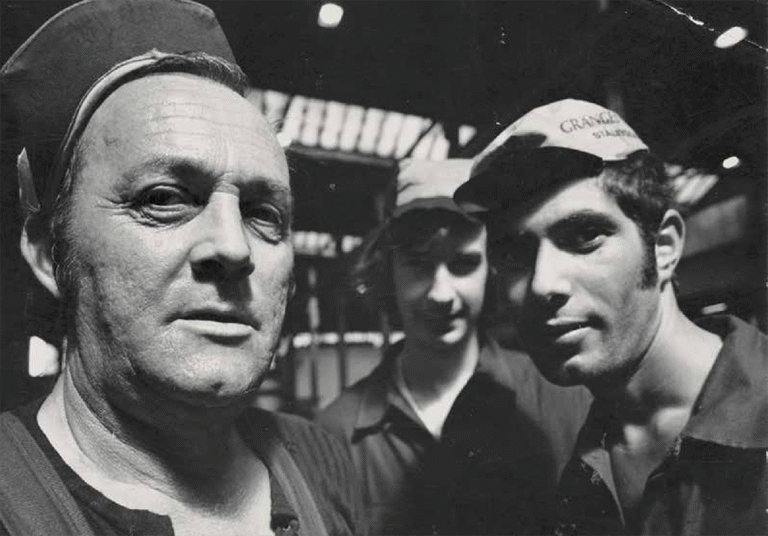
Of course, there are those companies that have changed so drastically from their origins that no one can claim they continue to build on the same founding idea. Gränges, today a leading company in aluminum technology, for example, has few connections to the mining and railway company founded in 1896. The fact that the company still has the same organization number is mostly a historical curiosity.
At the same time, the history of Gränges is still an exciting account of a company that has grown, shrunk, and grown again, sometimes as new acquisitions have become the core of the business. It is a history of not just changing, but also setting everything aside and making a fresh start when the world around it demands it. That story, too, can strengthen the brand and empower today's employees: We are not afraid of difficult decisions and choose the paths needed to remain relevant.
As these examples show, a company’s history rarely follows a straight line. It includes detours, periods of growth, and lulls. “History is unruly,” as Alexander Husebye, CEO of the Centre for Business History, often says. But that is also what brings it to life. The details about people, events, and choices make the company seem real and authentic.
But of course: to use history in brand building, make sure you really know your history. Never abandon a critical attitude towards your own history marketing.
Coca-Cola’s German subsidiary learned this the hard way in 2015 when it launched an ad to celebrate Fanta’s 75th anniversary. Fanta had been created by the German subsidiary, using apple fibres when it was difficult to obtain ingredients for regular Coca-Cola. In the ad, they talked about reliving the “good old days” with a Fanta Classic. But counting back 75 years took you to 1940, in the midst of the rise of the Nazi regime and Hitler’s rule.
There is nothing inherently strange about pointing out that Fanta was from leftover products, it can even be seen as environmentally aware--but describing that time as "good old days" showed that no one had thought the history through properly. The campaign was quickly ridiculed in the media, all the way to the most popular talk shows in the United States - and quickly withdrawn.
Active use of history strengthens the brand—provided the company really knows its history.
New hires at older, often somewhat larger, companies may hear: “You have to be here for a while to understand how we do things. The culture is ingrained in the walls, you see.”
That seems like an unusually foolish place to keep it.
Because what good is a culture that is embedded in the wallpaper, when it can instead be kept alive, even for new employees, through active historytelling? History can help a company show how it became what it is. Just as a brand’s external associations have been created over time, corporate culture can be seen as the collective work employees have carried out over the years. It shows how the organization remains a living organism, evolving through adaptations to changes in its environment.
So if management wants to strengthen the culture, it must understand which historical events have shaped it. Conversely, if it wants to change the culture, it also needs to understand what created the current situation.
Often, corporate values are expressed as “we strive to be knolwedge leaders,” “to always deliver the highest quality,” and “put customers first”. How much do general statements like that distinguish a company from others? This is where stories from before come in. Stories about how those who came before us worked can provide concrete inspiration that make the value statements come to life. “Show, don’t tell” is a basic principle of storytelling, and it works just as well when using company history internally. Don’t say the company is “a world leader”—show, through examples, how it got there. Don’t say “management cares about its employees”—show how it does so, and how it has done so in the past.
Company history also shows how the business has taken shape, how products have developed, and how its culture has been formed. Realizing that many people have contributed to today’s company over a long period of time inspires engagement. Ericsson’s success in Asia would not have been possible without the first brave sales agents who were on the ground at the turn of the previous century. As my colleague Eva Ersson-Åbom has reminded me: “History is time in motion, and many people have played their part before today’s generation took over.”
This is particularly important for companies operating globally. When a business has a presence in many parts of the world and its employees come from different cultures, the need to clarify what the company stands for increases.

The questions “who are we?” and “what is our history?” also become especially relevant during acquisitions. Long-serving employees may suddenly see their workplace change and feel that parts of their working lives have been taken away. No one wants their efforts to have been in vain. That feeling can spread if the acquired company’s history is rejected or pushed aside.
The acquiring company should therefore take history seriously when the businesses are being integrated. In our fast-paced era, insensitive conduct can lead the most sought-after employees to leave quickly, while those who stay lose engagement and momentum. In a 2022 interview, Annika Falkengren, CEO of bank group SEB for many years, highlighted the risks of acquisitions: “You get customers and staff who have not chosen you, so you start with
two minuses.”
The antidote in such a situation, we believe, is respect for history. This can take the acquiring company a long way, both in its customer relationships and in the competition for talent.
The French drinks group Pernod-Ricard, which owns Swedish Absolut, Irish Jameson, Scottish Chivas Regal, French Ricard Pastis, and English Beefeater, preserves each brand’s history in separate archives in its country of origin. Local archivists work as “chief storytellers.” The strategy strengthens both cohesion across the globally dispersed group and the continued success of each individual brand.
Another drinks giant, Bermuda-based Bacardi Group, takes the same view and acts accordingly: every drink in its extensive brand portfolio has its own archive in its home country.
Later, we’ll take a closer look at the value of a well-organized company archive. But even here, I want to highlight how much easier a well-functioning archive makes it to find documents and objects that show employees what makes their particular company unique—something no competitor can ever copy. That is how culture is truly taken off the walls and laid out for everyone to see, pick up, and feel.
Nothing says “this is who we are” more clearly than the founders’ meeting minutes, photographs from old customer events, or letters from employees posted abroad describing their challenges. Such items can also show that today’s values have historical roots.
For example, the Coca-Cola company archives in Atlanta include a speech from 1936, when CEO Robert Woodruff celebrated the company’s 50th anniversary. Instead of celebrating the company’s success and recovery after the Depression, he focused on all that was yet to be explored. He feared that the company would become complacent and lazy, an idea that runs throughout the speech. On the first page of the two-page typewritten speech, Woodruff wrote a phrase in pencil that has guided generations of Coca-Cola employees: “The world belongs to the discontented.” That value continues to shape the company and all new employees, to this day, are told about how the world belongs to those who are never completely satisfied and always want to be a little better.
In IKEA’s corporate archive, there is a similar influential document. In 1976, the company’s founder, Ingvar Kamprad, wrote what he called “A Furniture Dealer’s Testament,” with nine theses about what made IKEA uniquely IKEA. (“Testament” was a premature label. Kamprad remained active in the company until 1988 and lived until 2018. But he had a knack for expressions that made people sit up and take notice.)
The ninth and final thesis is related to Woodruff’s phrase and reads: “Most things remain to be done. What a wonderful future!”
Since then, the document has been printed and distributed to thousands of employees over the years, and supplemented with guiding stories from the lives of Ingvar Kamprad and IKEA.

The Italian tire manufacturer Pirelli has a week-long induction program for new employees, P-Lunga, with history running through it as a common thread. The first day begins at the Pirelli Foundation, which is responsible for the group’s archives. The facilities are also used for corporate events and conferences, including when employees from overseas subsidiaries visit Italy. The idea is to increase knowledge of the company’s heritage among groups who are there to plan for the future.
There are many more examples of how history is communicated to employees. Bert and John Jacobs, brothers and founders of the American clothing company Life is Good, have written a book about their upbringing, family, and views on life as entrepreneurs. It is given to all employees to explain which “family” they now work with and belong to. In HR contexts, such a publication is sometimes called a “playbook.” A large European bank, instead of creating a playbook made its own version of the board game Timeline, in which players have to build a timeline of events without seeing the dates. Here, the events are important milestones in the bank’s history, and the game is used in induction courses for new employees.
A company’s own history can also be used to boost morale in difficult times. When the savings bank idea turned 200 years in 2020, Swedbank, with roots in Sweden’s first savings bank in 1820, wanted to celebrate the anniversary. However, the coronavirus pandemic made an in-person celebration impossible. Instead, one of the activities was a 72-page popular history magazine about the history of the savings bank idea. It was sent to all 9,000 employees in Sweden and the Baltics. The magazine told the story of the development of savings banks over 200 years, how society had changed, and what banking services had been needed at different times. The narrative highlighted the bank’s positive role in society and people’s lives through key events from different eras. The fact that this was also told when the bank’s name recently had been linked in media to a money-laundering scandal in the Baltics helped readers remember which path an heir to the savings bank idea actually traveled. (We’ll take a closer look at Swedbank’s 200 year celebration at the end of Chapter 4.)
A company that actively uses its history helps employees maintain their motivation and find energy for the work ahead. History also helps new employees, and those considering joining, understand the company they will be working for. What better employer branding tool could a company’s leadership ask for to strengthen the organization?
While the first two benefits were largely about communication—external in the first and internal in the second—the third benefit concerns how history helps the business itself, both in difficult situations and in forward-looking work. Because history can help an organization manage risks, protect its interests, and develop products.
Of course, this requires preserving the company’s history, with all that entails in the form of agreements, project plans, product developments, logos, naming choices, packaging, customer preferences, and market positioning.
Or delivery routes.
Which the ice cream truck company Hemglass learned the hard way in 1992. Since 1968, the company had hired drivers who sold ice cream directly to customers at their homes. But when Hemglass wanted to renegotiate its franchise agreements in 1992, many drivers were so dissatisfied that they broke away and formed a competing ice cream truck company.
Hemglass quickly recruited new drivers, but had no routes to give them. There were no records of where the trucks usually drove, where they stopped, or at what times. The information had disappeared with the drivers, who had been independent agents rather than employees.
Hemglass had to move fast. The breakaway drivers were already driving the old routes and were winning over customers to their new brand. Hemglass didn’t have a corporate archive to turn to, so it had to get creative in rebuilding its own history. It placed ads in local newspapers, and also
sent out mass mailings to households with a request: Could you please send in your old Hemglass ice cream flyers in exchange for a gift? The company knew that people often put the flyers on their refrigerators – and printed on the flyers was not just which flavors were for sale but also the local schedule of stops. People sent in flyers, and Hemglass went through them all and was able to reconstruct the truck routes. They then slotted all stops for their new drivers at
five minutes earlier than before, so they would arrive before the new competitors at each customer stop.
It ended well for Hemglass, which not only survived but after a few years was even able to merge with the competing company. Hemglass could have saved itself a lot of time and
trouble though, if it had archived its mailings to households and even requested route lists from the drivers.
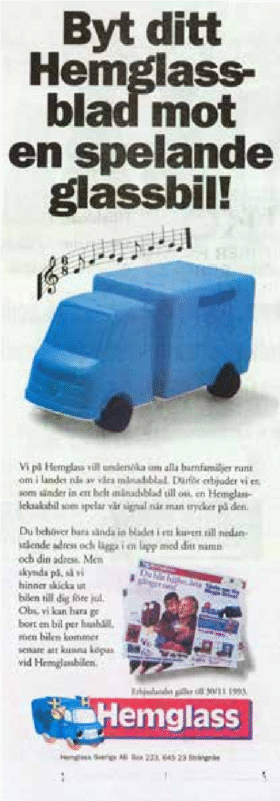
The Hemglass story shows how important it is for a company to keep a living memory of its operational history. Much of what a company creates over time will become its core knowledge, the essence that makes the company truly unique.
The same applies to the company’s intellectual capital, such as logos, brands, and products, where archives can verify ownership and proprietarity. Here, historical records clearly becomes an asset in risk management.
Not to mention how archives can show that companies have lived up their obligations. Just ask one of our major Swedish banks.
In the late 1990s, the bank (which we’ll leave unnamed) was contacted by its American lawyers. There were new regulations for companies that had run insurance operations in the United States during World War II. These companies now had to be able to show whether they had any policyholders who were victims of German concentration camps. If so, their survivors could be entitled to pay-outs. At the bank’s headquarters in Stockholm, they were a bit confused. The bank had never engaged in insurance operations in the United States. It turned out, though, that another insurance company, which the bank had recently acquired, had, for a period of time, operated a branch in the US. The fact that it had only offered property insurance, and not life insurance, was irrelevant to the American regulatory framework. The insurance company had had a presence in the US, which meant that all types of insurance policies sold by the company, and its new owner, in all countries, not just the US, came into play.
The bank now had to show that it had no obligations towards Holocaust victims or risk facing a costly lawsuit. There was also a third option: the bank could settle the legal proceedings by paying several million dollars to foundations whose proceeds went to the relatives of Holocaust victims.
The bank’s board rejected that option – and this is when it realized how valuable it was that the recently acquired insurance company had for many years invested in the management of its corporate archives.
That archive was housed with us at the Centre for Business History in Stockholm, and the bank turned to us for help. Could it be that the policies sold over the years by the insurance company were in the archive? Yes, they were, properly listed and kept on archive shelves. For a couple of months, several archivists looked for Holocaust victims in all the insurance policies of the
company. In the end, they found none. The bank could announce on its website that it had conducted a thorough review and also welcomed any relatives of Holocaust victims to contact them if they had questions about any specific cases.
Similar class-action lawsuits were filed against many other banks and insurance companies in Europe that had operated branches in the US. Several of them had to pay substantial amounts to survivor foundations when they could not demonstrate that they had no obligations. The fee that the Swedish major bank paid for research into its archives was a fraction of what a “knowledge gap” in their history could otherwise have cost them.

A clearly told history can not only protect against the misappropriation of intellectual property and other legal risks. It can also guide the company’s future development.
Previously, we have looked at Clas Ohlson and LEGO, both of which have used their history as a guide when changing direction and restructuring. Another example is the Italian hatmaker Filippo Catarzi, which has been making hats in Signa, Tuscany, since 1910. In 2021, the company sold 200,000 hats worldwide, many of them based on the original straw design around which it was founded.
But around the turn of the millennium, sales had been considerably lower. Fewer people wore hats, and competition from cheap Asian models was intensifying. The family-owned company, then in its fourth generation, nevertheless chose not to compete on price. Instead, it began selling its hats through stories about the craftsmanship and traditions passed down through four generations.

The centenary in 2010 marked the beginning of a clear history marketing strategy. The company published the anniversary book Intrecci di Capogiro, which became a sales success. But management stressed that the process of creating the book was almost more important than the book itself: it created a shared corporate vision and helped guide future planning. The company’s engagement with its own history continued after the anniversary, as did its collaboration with heritage institutions such as the regional straw-weaving museum.
This example, along with nineteen other examples of Italian companies using histories - including the one about Perelli earlier - can be found in the worthwhile Corporate Heritage Marketing from 2021 by Angelo Riviezzo, Antonella Garofano, and Maria Rosaria Napolitano.
History can of course also be used to develop products or services. That is what the Italian clothing company Benetton does, for example. It has its own corporate archive, Archivio Benetton, in a former clothing factory in Ponzano, outside Venice. The archive opened in 2009, is managed by three full-time archivists, and contain more than 12,000 garments and 50,000 photographs, in addition to catalogs, advertisements, and early knitting machines. The company’s fashion designers regularly come here to seek inspiration for their next collection. In this way, an awareness of history helps each new collection stand on its own, while also making it a clear next step in Benetton’s design development.
Shoe manufacturer Adidas works in a similar way, drawing inspiration from historical products in its archives. In January 2023, the company launched several new shoe models as modern interpretations of old classics, including the Stan Smith and Superstar.
Breweries also use history to develop new products. Irish brewery Guinness launched West Indies Porter in 2014, based on an 1801 recipe. The label also drew inspiration from the company’s historical collections. American company Anheuser-Busch revived Faust beer in 2015, a dark lager whose 1884 recipe had been preserved in the archives. That same year, Swedish brewery Spendrups relaunched its Gränges beer from Grängesberg, with a new label inspired by material from the company archives.
Irish whiskey maker Powers also found inspiration in its history when it launched Powers Rye Whiskey in 2023, a whiskey made entirely from rye. It was the first time in modern history that an Irish rye whiskey had been launched. Company archivist Carol Quinn had found old recipes showing that the distillery had worked with rye before—which made the venture even more credible.

History can therefore be used for much more than building the brand and strengthening the organization. It also helps with risk management and development, both at the strategic level and in practical implementation. Not bad for an asset that is created almost as a by-product, simply by continuing to do business.
This chapter is drawing to a close. We began by observing that history is a strategic asset, and then reviewed the tactical benefits companies gain when they make use of their history.
Based on this line of reasoning, we at Centrum för Näringslivshistoria have formulated our definition of strategic, business-driven use of history—or history marketing, for short. I wrote it in the introduction, and here it is again:
History marketing is when a business actively uses and works with its own authentic story and historical context to strengthen the brand and the organization.
We have previously touched on all parts of that definition, but I want to return to two key words.
The first is active. This makes a clear statement of intent. A company may see its history as a strategic asset and still choose not to give it much attention. Other assets are prioritized and receive resources, budget, and time. Perhaps management simply cannot see how the company’s history can be put to use. Hopefully, the discussion in this chapter has made them think again. History marketing is about making a conscious choice: actively investing in the company’s history.
The second key word is authentic. Companies that actively work with their history naturally have a goal and purpose in telling it. They want to inform, educate, influence, or sell. But authenticity is not at odds with these purposes, it is a prerequisite for them. Effective use of history is clear about its reasons, reliable in its facts, and grounded in evidence. A history with a clearly identified source and an open purpose also shows respect for the recipient’s ability to make their own critical assessment. The story also becomes far more powerful when it strives to present a fact-based, nuanced, and balanced picture of the organization’s development—with both the bright and the less flattering aspects.
THOSE WERE SOME FINAL ARGUMENTS for the importance of being active and authentic in your storytelling about the past. In our experience, the path to this is full of important choices organizations must make about how they use their history. The next chapter is about these trade-offs.
Or you can first read a short text about how academia views the use of history. It takes a broader view of the concept than the one focused specifically on companies.
History Marketing - The History of Companies as a Strategic Asset (Business History Publishing, 2023) by Anders Sjöman.

Updated